

E-Invoicing in Riyadh: A Complete Guide for Saudi Businesses
In the last decade, e-invoicing has become a buzzword around the globe; every country is shifting towards e-invoicing implementation for better tax management. Saudi Arabia is also one of these countries where the government is working progressively to implement e-invoicing across KSA businesses to improve tax collection and reduce tax evasion. This regulatory push means that companies that are operating in cities like Riyadh that are hubs of growing businesses, must adopt e-invoicing or risk penalties and loss of business. Although this adoption can be challenging, it also offers significant benefits to companies, such as cutting down the time and resources involved in manual processing and also contributing to reducing paper use. Thus, embracing e-invoicing in Riyadh is essential for businesses looking for statutorily aligned operations and wanting to drive expansion, agility, and competence.
What is E-Invoicing in Riyadh, Saudi Arabia?
The Saudi E-Invoicing system Fatoora was created with the intention of further digitizing the Saudi taxation system by making it mandatory for businesses to generate their invoices electronically. The idea was to ensure that every Saudi business had clear systems in place with ZATCA, the legal body responsible for overseeing Fatoora e-invoicing; this way, ZATCA was able to keep a check on every transaction and reduce the risk of tax evasion. E-Invoicing totally replaced the traditional use of paper invoices across the Kingdom with well-structured and compliant electronic invoices. This made E-invoicing an integral part of every business’s routine operation; neglecting it was simply out of the question. E-Invoicing is specifically mandated for companies that are registered for VAT, with specific rules applying depending on the type of transaction they make.
The Two Phases of E-Invoicing
E-Invoicing in KSA was introduced by dividing it into two phases to ensure that every business first prepares fully in the first phase before the second integration phase rollout, which focused more on technical specifications and ZATCA integration.
Phase One: The Generation Phase
Phase One came into effect in December 2021, which required companies that are subject to regulation to start generating and storing invoices electronically using the right and compliant systems. This phase largely centered on making businesses ready, so they are able to understand and implement the upcoming integration phase more professionally. E-Invoicing was a completely new concept for the companies running on traditional systems; therefore, Phase 1 required them to start generating and processing their invoices electronically by upgrading their internal teams and systems. ZATCA also mentioned unlawful behaviors such as not implementing controlled access, log tampering, or having multiple sequences of invoices to expedite e-invoicing regulatory adherence.
Phase Two: Integration Phase
The later Phase 2 originated in January 2023 and was rolled out in waves, targeting large enterprises first and then gradually moving toward medium and smaller companies. This phase gains paramount importance for every business because it mandated integration with ZATCA. ZATCA asked all applicable businesses to integrate their electronic invoicing systems with the FATOORA platform. Additionally, there are technical requirements that every business must adhere to remain compliant in KSA. The integration with ZATCA is for the real-time validation of invoices, depending on the clearance or reporting model.
What are the Technical Compliance Requirements of E-Invoicing in Riyadh?
1. Use a ZATCA-compliant e-invoicing solution
Businesses must use an electronic e-invoicing solution that is compliant and capable of providing invoices as per the ZATCA guidelines. They must connect with the FATOORA platform in real time and implement the needed security features.
2. Required invoice format: XML / PDF-A-3
For phase 2, the XML or PDF/A-3 with embedded XML structure must be followed for the electronic invoices and the associated notes. PDF invoices are no longer allowed or accepted by ZATCA.
3. Invoice data must follow ZATCA’s Data Dictionary
The electronic invoices must hold all the necessary attributes that are listed in ZATCA’s data dictionary, which includes information including: type of invoice, seller data, buyer data, VAT registration number, quantity, line-item related information, VAT rate, VAT amount, payment information, and reference to the previous invoice.
4. UUID is required
A UUID is another important requirement, as it is designed to identify that every invoice is one of a kind. Every Universally Unique Identifier (UUID) code is distinct from any other UUID code around the world, which prevents the duplication of invoices. Your invoicing systems must be able to generate and manage the UUIDs.
5. Invoice must contain an invoice hash
For Phase 2, businesses were required to include an invoice hash along with the XML. This hash improves the credibility of the e-invoices as it is a part of ZATCA’s security measures and invoice validation systems. This hash must also be included in the QR code of the invoice.
6. Cryptographic stamp
Another integral part of the e-invoicing technical requirements is a cryptographic stamp, which is used to authenticate the invoices. This stamp must be linked to the taxpayer’s security credentials and used as part of QR code structures.
7. Mandatory QR Code
The electronic invoice should definitely have a QR code that holds the seller’s name, its VAT number, invoice date and time, the total VAT amount, XML hash, cryptographic stamp, and other necessary information as per the ZATCA laws. QR code is not merely a code but a link that follows a TLV structure.
8. VAT calculations must comply with ZATCA rules
The complete VAT calculation according to the proper rules is important; the XML format defines these requirements. Hence, the e-invoice must include the net amount along with the total amount, VAT amount, and the gross amount. If there are any discounts, they should be separately mentioned on the invoice, and at the end, the invoice-level totals must be clearly mentioned.
9. Clearance of standard tax invoices
The standard tax invoices used for business-to-business transactions should follow the clearance model. This means that all invoices that are generated must be first cleared before passing them to the recipient business. These invoices are sent to ZATCA, and once the response from ZATCA is received, any mentioned errors are corrected before clearing the invoice to the customer.
10. Reporting of simplified tax invoices
The simplified tax invoices used for the Business-to-consumer transactions follow the reporting model. These invoices are to be reported to the ZATCA within the given period but could be passed to the customer without waiting for the clearance, so there are no delays in the routine B2C transactions. Every business must distinguish between the simplified and standard tax invoices and apply the right integration to each.
How Does E-Invoicing Work in Saudi Arabia?
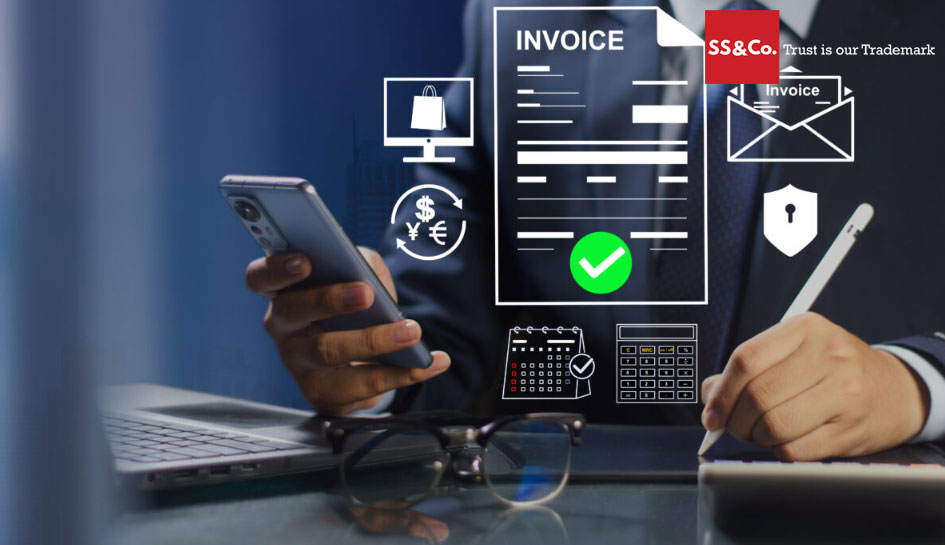
As we mentioned above, electronic invoicing is a critical step with several minor requirements. Every business must follow a step-by-step approach to ensure that they comply with all the invoicing policies, but first they must understand the invoice type they want to generate. These steps include:
- The creation of digital invoices by using systems that are compliant with the FATOORA platform
- All the above-mentioned necessary technical elements must be included on the invoice clearly. Such as the QR code, VAT-related data, and e-stamps
- Every invoice should be verified by the experts and double-checked to know if it fulfills all the requirements and to avoid any later problems
- Syncing the systems with the ZATCA platform to get the invoices validated for simplified and standard tax invoice exchange based on clearance and reporting models.
- All the necessary e-invoicing documentation should be archived securely along with supporting documents for audit support.
How Should Riyadh Businesses Prepare for E-Invoicing?
To make certain that electronic invoicing processes are applied with full precision and proficiency, businesses must consider it a critical routine operation by focusing on the following areas:
- Review Existing Invoicing Processes on a regular basis so that if there are any inconsistencies in how the invoices are processed and shared, they must be fixed right away before they are identified by the ZATCA.
- Check their Accounting systems to know if they are always fully integrated with the ZATCA systems; if any upgrade in the ERP, POS, or accounting system is required for merging with ZATCA, it must be done as a priority
- Pick the Right Solution that is able to deal with your business transaction volumes and operational demands. So, there are no lags or downtime in the processing of the invoices.
- Maintain Clean Data over secure cloud channels to protect you in case of any ZATCA inquiry or audit trail. This is also necessary for transparent cash flow management of the company.
- Test Before Going Live to avoid any last-minute hassle. Make sure that you have everything aligned before implementing the mandatory integration phase, as even minor mistakes can turn into major consequences.
Why must businesses in Riyadh emphasize E-Invoicing?
Any business that is registered for VAT cannot perform law-abiding operations without adhering to the e-invoicing laws. This not just help them perform sound operations but also benefits them in many other ways, such as:
- Authorities are able to keep track of their financial data and rely on electronic invoices, which are less prone to errors or inconsistencies.
- Businesses maintain a clear record, which also facilitates them in achieving better investments and making intelligent decisions
- Every transaction is clearly visible to the business owners through the online portals; it helps them have a check their sales transactions.
- Better Compliance management, as taxation and other legal obligations demand clear management of financial data for calculation and filing.
- As VAT is closely connected to e-invoicing, it also helps businesses achieve complete VAT compliance through applying correct VAT treatments and record management.
How can Chartered Accountants help you with E-Invoicing?
A professional chartered accountant can be a great helping hand when it comes to compliance with e-invoicing in Riyadh. Electronic invoicing can be a demanding process, particularly for companies running on legacy systems, understaffed teams, or businesses that are just starting. A qualified chartered accountant knows where you need help and not only guides you accordingly but also upgrades your traditional systems and makes sure that everything is in line with the policies of the ZATCA Fatoora platform.
From reviewing the e-invoicing procedures and identifying the compliance gaps to fixing the mistakes and testing the invoicing process, they take care of it all. So, in the end, your teams don’t have to stress over the nuances of e-invoicing compliance in KSA. Large-scale companies that have complex business transactions require advanced tools along with expert supervision. These external e-invoicing service providers are equipped with all the needed tools to fulfill e-invoicing statutory obligations.
SS&Co is one of the emerging e-invoicing service providers in Riyadh. With a team of well-trained chartered accountants, SS&Co has satisfied hundreds of clients over the last couple of years. By working on every minor to major e-invoicing detail, we ensure you ZATCA compliant e-invoicing services in Riyadh.